STOP WINNING ARGUMENTS AND LOSING RELATIONSHIPS.
Choose to Lose is a practical, faith-rooted approach to stronger relationships—helping you release pride, control, defensiveness, scorekeeping, and the need to always be right so connection, trust, peace, and love can grow.
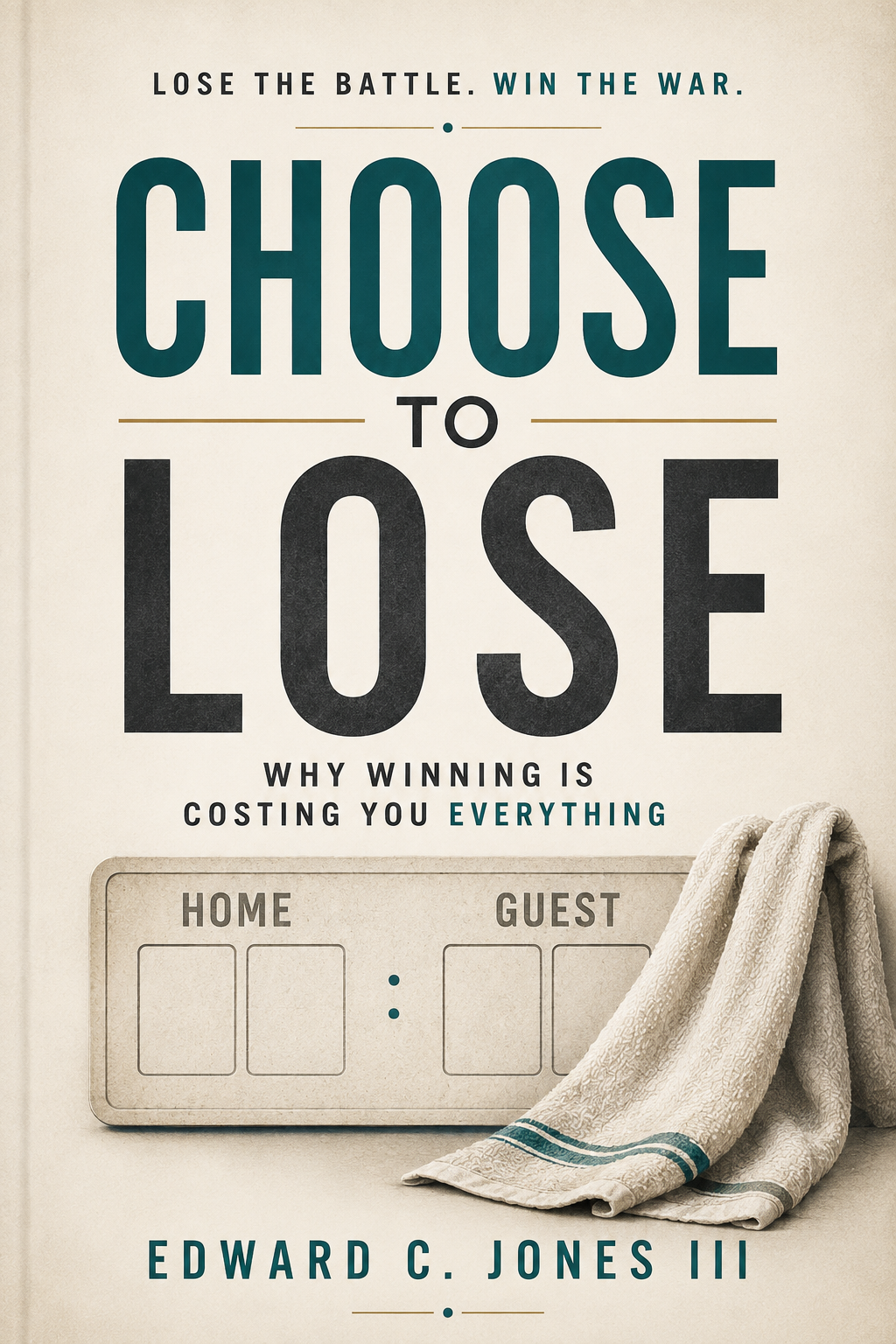
Have you ever won the point…and lost the room?
Proving your point while your spouse quietly shuts down.
Remembering every past mistake, filed away for the next disagreement.
Feeling the need to defend yourself before you've even heard the whole story.
Trying to control outcomes because uncertainty feels unsafe.
Correcting instead of listening.
Leading people well on paper, but slowly losing their trust.
If any of this sounds familiar, you're not alone—and you're not broken. You may just be keeping score of the wrong things.
Maybe we have been keeping score of the wrong things.
Choose to Lose does not ask you to become passive. It teaches you to surrender the things that destroy connection—so you can start keeping score of what actually matters.
What Are You Fighting to Win?
A free, three-minute assessment to help you recognize the pattern that may be shaping your relationships—at home, at work, and in ministry.
Keeps emotional ledgers and remembers who did what.
Feels compelled to explain, justify, or protect.
Reduces uncertainty by managing people and outcomes.
Protects peace by avoiding necessary tension.
Rushes to solve rather than listen and understand.
This is not about losing yourself.
Choosing to lose does not mean tolerating abuse, abandoning your boundaries, staying silent in the face of injustice, or disappearing.
It means surrendering ego, pride, control, defensiveness, and the need to dominate—so what matters more can survive.
START WITH THE BOOK. CONTINUE WITH THE JOURNEY.
The book gives you the language. The journey helps you live it.
This book is for the person who is exhausted from winning the wrong things—the husband who has won every argument this year and is sleeping on the far edge of the bed, wondering why the house feels cold; the leader whose team delivers results but won't tell them the truth; the pastor who is winning the platform and losing the congregation's actual trust.
If any version of that sentence made you pause—this book was written for you.
- —Name the scoreboard—the invisible system measuring your worth by winning, and the hidden cost it has been extracting
- —Go interior: the fear of vulnerability, the weight of shame, the habit of proving yourself, the fear of disappointing people
- —Move outward through the grudge, the distraction, the argument, the stage, and the spotlight—every place the scoreboard shows up between you and the people you love and lead
- —Meet the theological center: kenosis, the basin, the towel—why this is not just strategy, but sacred
- —Build the daily discipline that turns "choosing to lose" into a way of life, not a single decision
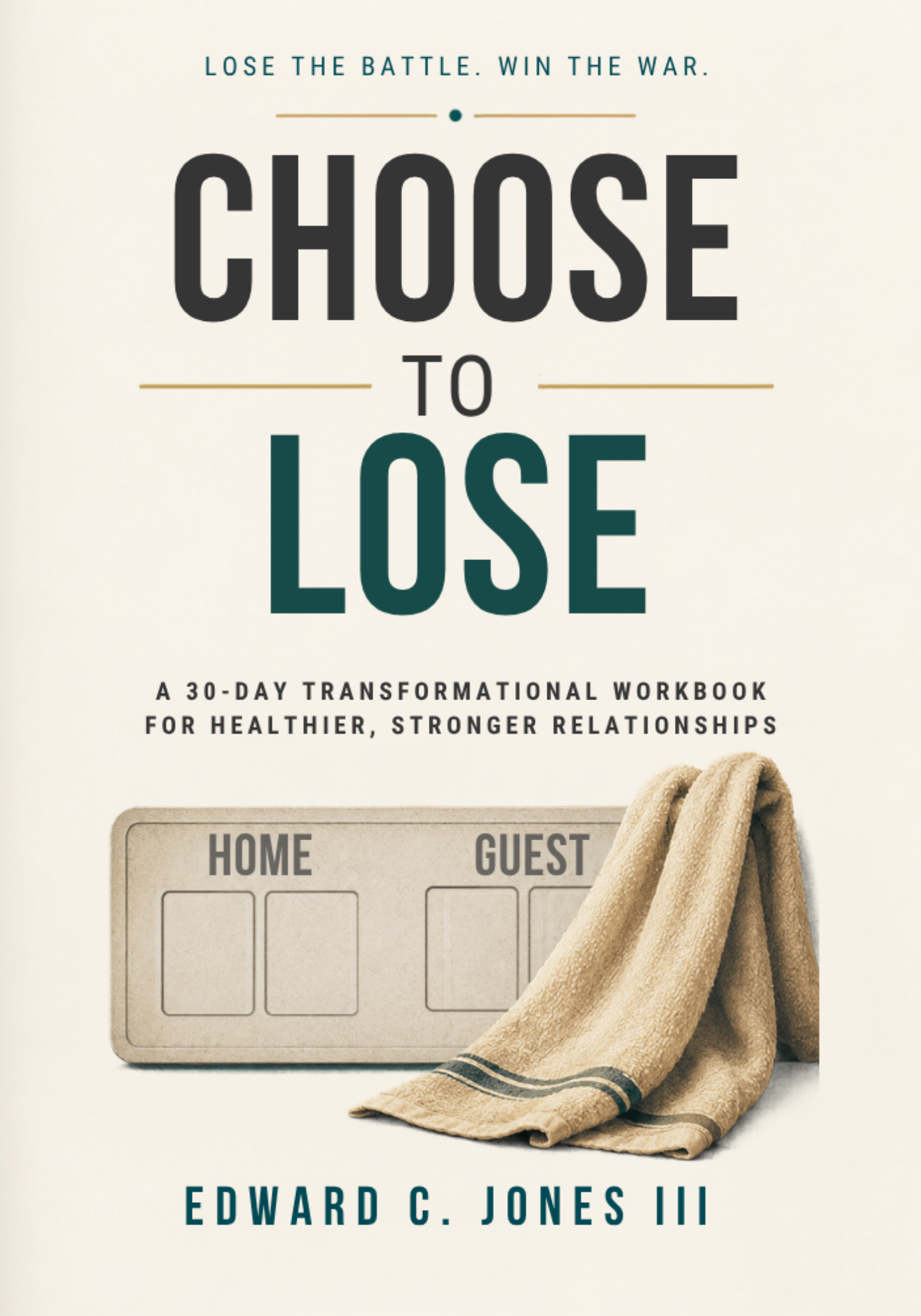
What are you struggling with? What could change? Where should you start?
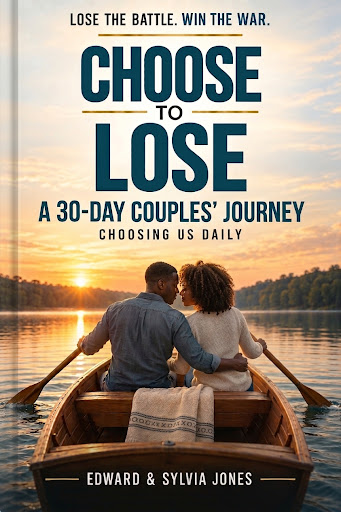
Communication, conflict, and intimacy
Struggling with scorekeeping, defensiveness, or distance? Rebuild trust with Edward & Sylvia Jones's 30-Day Couples' Journey.
START HERE →Leadership, marriage, and fatherhood
Learn strength without domination—surrender that builds rather than diminishes you.
START HERE →Identity, leadership, and relationships
Lead without losing yourself—release the pressure to prove, control, or carry it all alone.
START HERE →Workplace and ministry culture
Move from control to trust. Servant leadership that earns loyalty instead of demanding it.
START HERE →Curriculum, sermons, and retreats
Bring Choose to Lose to your small group with the workbook, discussion guides, and facilitator tools.
START HERE →The Night Everything Almost Broke
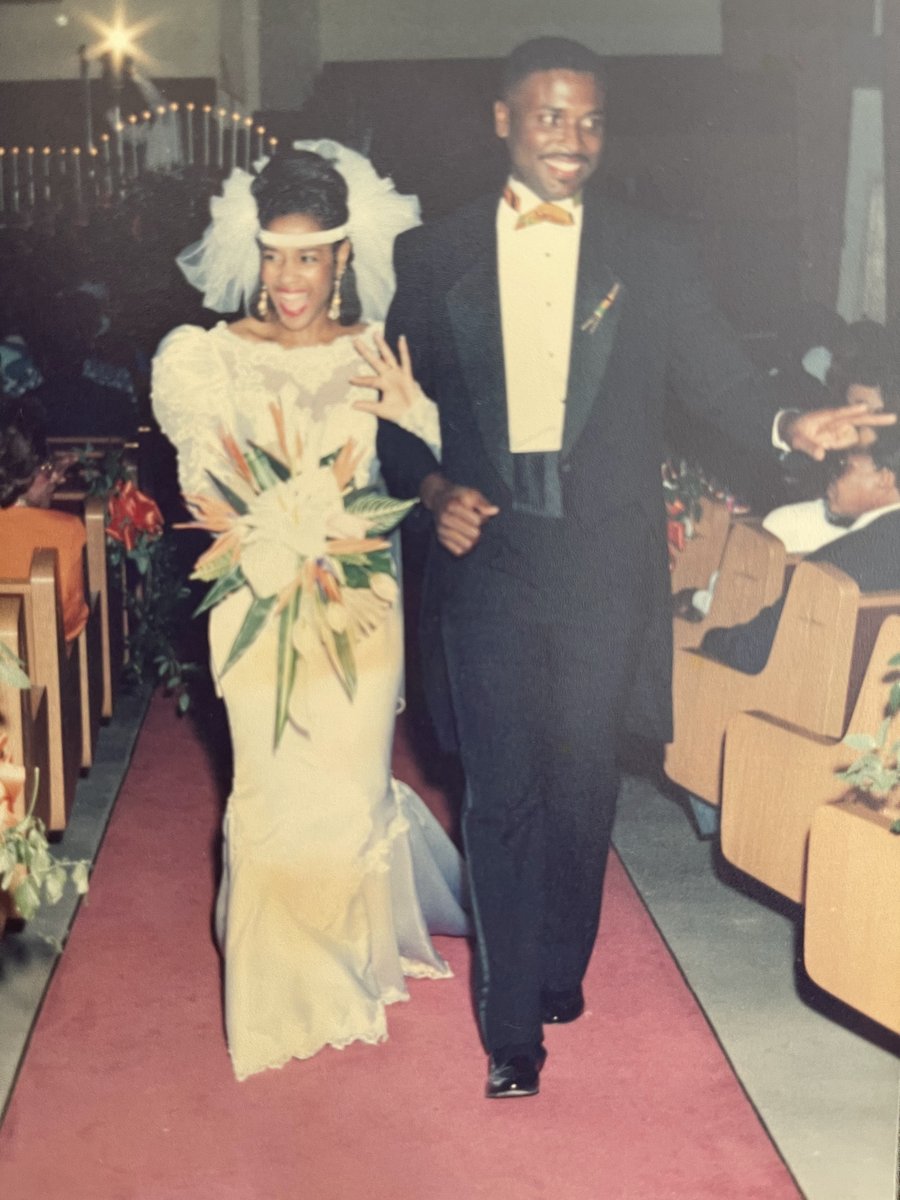
In the early, fragile days of my marriage to Sylvia, the battles were relentless. I was navigating the complicated terrain of a blended family—the tension with my daughter's mother was constant, unpredictable, and sharp. Every disagreement was followed by another voicemail: angry, laced with accusations, words you wouldn't want your neighbors, let alone your church members, to hear. But everyone heard them. And Sylvia heard them loudest of all.
My wife is a gentle woman—until the line is crossed. On those days, she was ready for what she called “The Royal Battle.” She'd stand near the answering machine on our kitchen counter like a prizefighter waiting in the corner of a ring. Fists clenched. Jaw set. Patience stretched to breaking.
I still see it. One night after a 24-hour shift at the firehouse, I stumbled through our front door—physically spent, smelling like wood smoke and fatigue. I wanted a shower and a bed. Instead, I found a war zone.
Sylvia's finger hovered over the blinking red light. She pressed play. The familiar, harsh voice filled the kitchen. I looked at her face and knew: tonight was the tipping point.
Internally, my ego wasn't just talking—it was screaming. I was a pastor-in-training. A husband. A father. A leader in my community. And yet here I was, backed into a corner in my own home. If I don't win this, I'm failing. I have to prove I'm right.
That night, I wanted to pick up the phone and win. I didn't realize that every time I “won” by being the loudest or the rightest, I was digging a deeper trench between myself and the people I loved most.
“Every time I ‘won’ by being the loudest or the rightest, I was digging a deeper trench between myself and the people I loved most.”
The Flyer That Changed Everything
Desperate for a lifeline, I noticed a plain, black-and-white flyer pinned to a community bulletin board: “7 Secrets of Effective Fathers.” Something quiet and persistent tugged at my heart. I signed up.
I sat in that workshop tired, half-prideful, half-broken, waiting for a management technique. Instead I heard a line that shattered my scoreboard for good: “The most important thing a father can do for his children is to love their mother.”
Simple. Profound. And in that moment, impossible—given the poison being left on my answering machine.
For weeks I wrestled—reading Scripture through a new lens, replaying the workshop, praying late into the night. Then one quiet evening, as clearly as I've ever heard anything, a voice in my spirit whispered four words.
“You have to choose to lose.”
Lose what? My pride. My right to retaliate. My desperate, ego-driven need to prove I was right.
In a raw, tear-filled conversation late one night, Sylvia and I sat at our kitchen table—the same table where we'd listened to those voicemails—and decided together that we had to stop fighting to win the moment if we ever wanted to secure our peace.
“It may look like we're losing this battle,” I told her, “but we're going to win the war.”
That phrase became our North Star. It carried us through fights that would have destroyed less committed couples—through hard conversations with family, messy leadership conflicts, tense church meetings, and the relentless grind of real life. Over and over, we chose to lose small battles—and won what mattered most: peace, unity, trust.
What changes when people stop keeping score
This book empowered me to let go of always being right—and now my relationships are stronger than ever.
I gave up winning every conversation and started to listen more, understand more, and pick up on the temperature in the room quicker.
If I say "no" to a request, they may be disappointed—but because of the value of the relationship, they'll still be my family, friend, church member, or co-worker.
THE WORLD GIVES TROPHIES. JESUS PICKED UP A TOWEL.
Jesus redefined greatness through service, surrender, humility, and love—teaching that true leadership is found in laying down your life for others, not in what you can win or control.
Theologians call this kenosis—Christ's self-emptying love, described in Philippians 2:5–7. The book calls it Chapter 15: Choose to Lose to Lead—the hinge the whole book turns on.
Choosing to lose does not mean tolerating abuse, abandoning boundaries, staying silent in injustice, or disappearing. It means surrendering ego, pride, control, defensiveness, and revenge.
“Winning makes you impressive. Losing well makes you whole.”
“The fight is never worth more than the person you're fighting with.”
“Legacy is never what you build. It's who you build.”
Your relationships do not need another victory. They may need a reset.
- —The Relationship Scorecard Reset
- —5 Conversations That Change the Temperature of a Relationship
- —The Choose to Lose Conflict Reset
- —7 Days to Stop Keeping Score
Speaking, retreats, and workshops for churches, teams, and organizations.

Keynotes and messages for conferences and services.
Marriage and couples retreats built around the Choose to Lose framework.
Leadership training for teams and ministry staff.
Small group guides and facilitator tools for churches.
DON'T JUST READ CHOOSE TO LOSE. PRACTICE IT.
“The life you find when you finally stop fighting to keep the one you've built is not a smaller life. It is a freer one.”
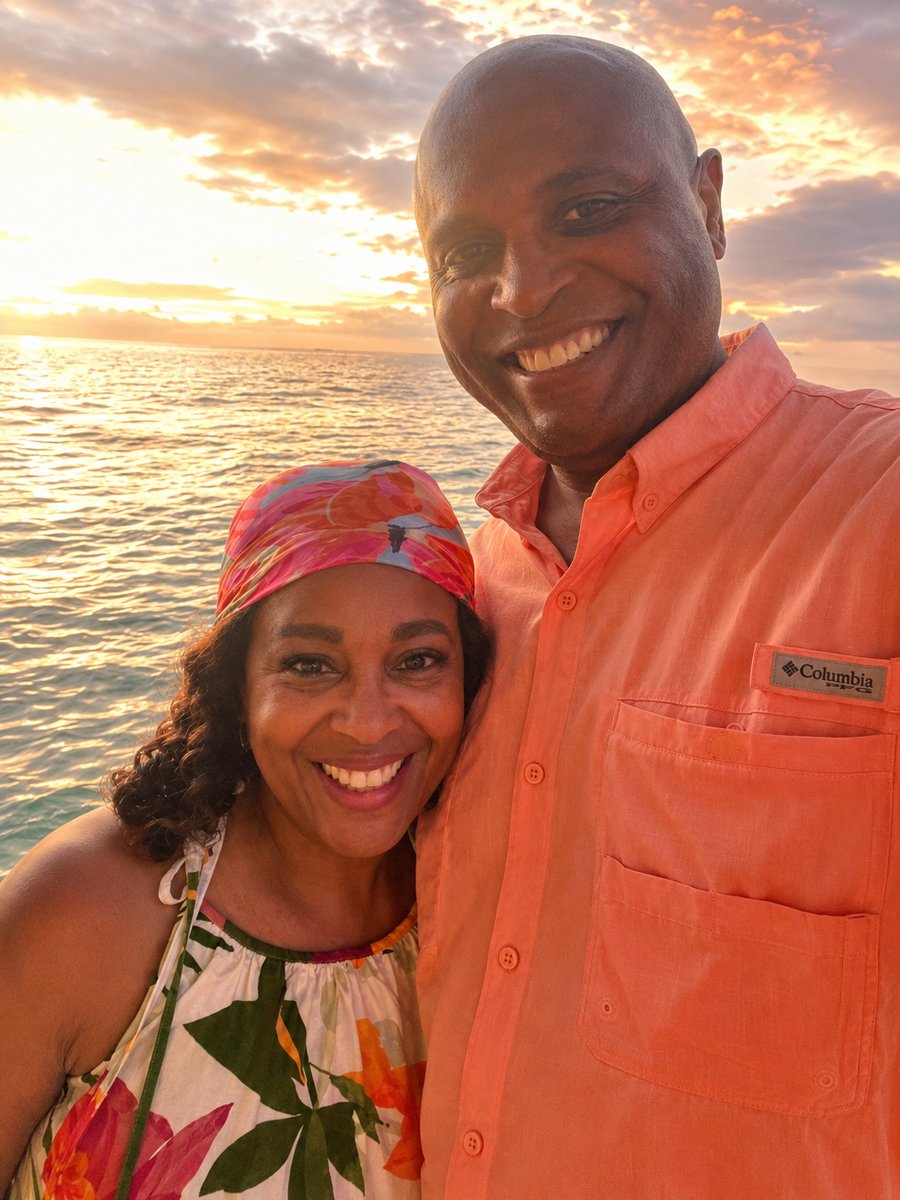
Edward C. Jones III is an author, pastor, leadership strategist, and relationship teacher. He holds an M.Div. and Executive MBA from the University of Houston, and served as a veteran and firefighter before decades of ministry and community leadership. He and his wife, Sylvia, have been married more than 35 years.